When the CEO starts asking hard questions, mature SPIFF programs sharpen — they don't shrink.
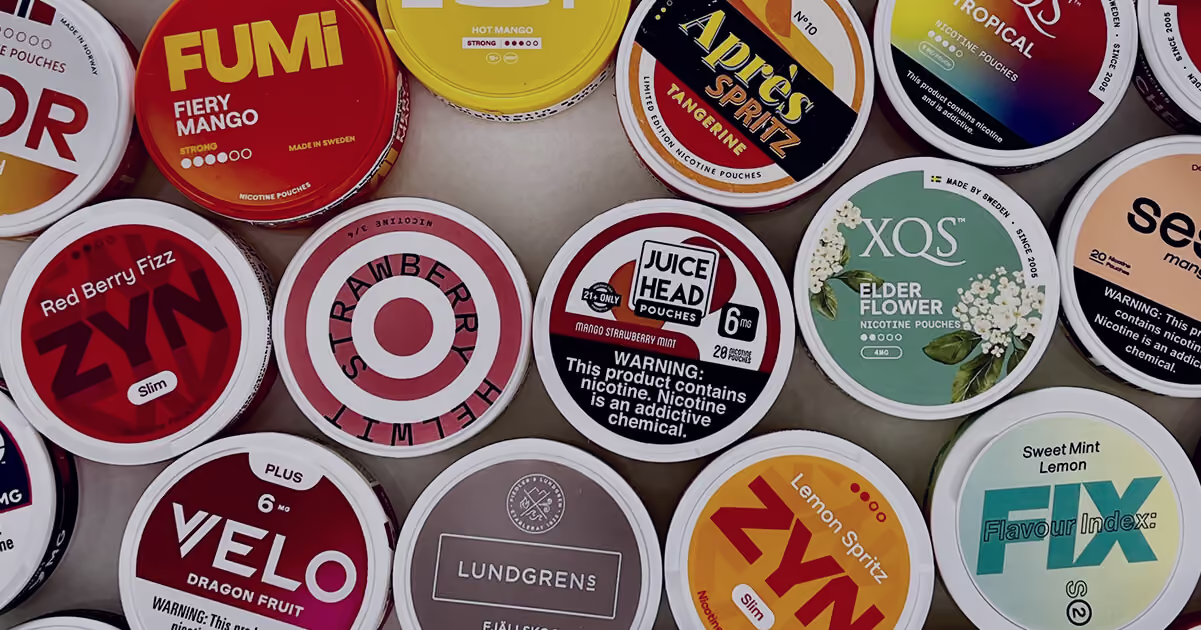
How Brusko, a leading nicotine brand, turned 14 months of clerk-incentive data into a sharper, more focused program. Dedicated owner, three new mechanic layers, operations-grade analytics.
products sold under the program
productive sellers
stores activated
months running

.svg)
At a Glance
Four numbers from the first 14 months of the program:

Challenge
Brusko launched the clerk-incentive program at the end of 2024. The first 12 months ran the way every well-executed SPIFF launch does: rapid onboarding through trade reps, a wave of new clerks every month, monthly redemptions climbing from a few thousand dollars to over thirty thousand. By month eleven, the program was paying out 3.3× more in monthly clerk rewards than it had in the first full month — climbing every month from a $8,200 December 2024 baseline to a $26,900 peak the following October.

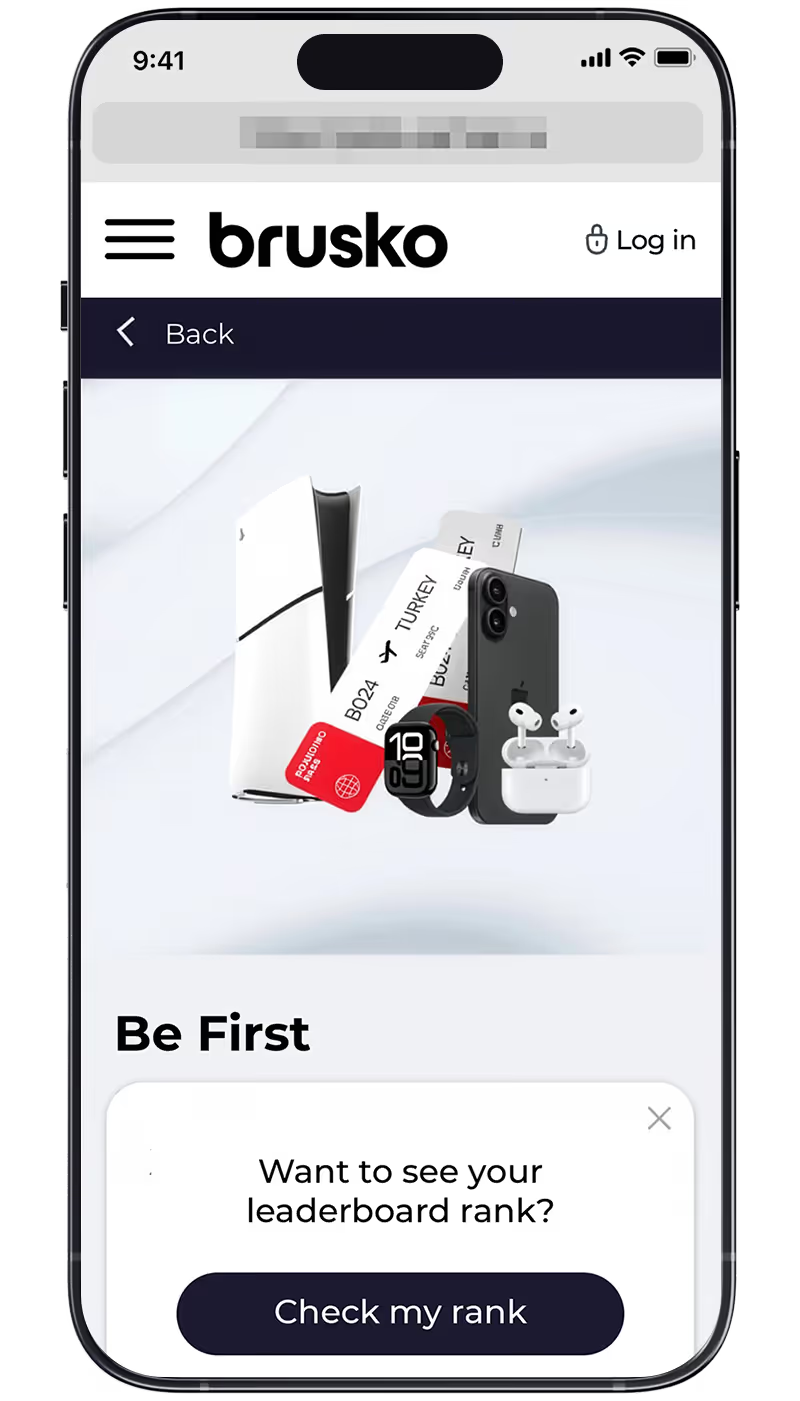
That's the moment a program stops being a marketing initiative and becomes a P&L line. The CEO took notice, and asked the commercial team three questions every serious operator eventually faces:
- What is the program actually buying us?
- How do we know clerks are actually influencing sales rather than scanning receipts that would have happened anyway?
- How do we defend this number internally next quarter?
Vasily Chigaev, senior commercial leader at Brusko, summed up the moment plainly:
The CEO asks for the efficiency analysis. Honestly, in our category — where the market shakes constantly — we can't deliver a clean A/B. Vasily Chigaev · Senior Commercial Leader, Brusko
The temptation, when a CEO challenges a program at this scale, is to either over-defend the existing setup or pull back. Brusko did neither. The commercial team treated the questions as a maturity prompt: a signal to sharpen how the program ran, not whether to run it.
Solution
The team made three structural moves over the next quarter, with Shopobill's customer success team in the room for every one of them.
Move 1 / A dedicated program owner
Through the first year, the program had been run as a shared responsibility across trade marketing and analytics. Effective during launch, but a coordination drag once the program crossed scale. Zakhar Armashev, an experienced regional supervisor, was brought in full-time as the program owner.
We can't drop the platform — we'd reset everything we've built.
Zakhar Armashev · Program Owner, Brusko
Single-owner accountability replaced cross-functional drift. Mechanic changes and analytics work now ran through one person who could move at the speed the program needed.
Move 2 / Sharper mechanics — paying for clerk influence, not clerk presence
The original program rewarded any validated receipt. After the CEO's questions, the team rebuilt the mechanic in three layers, each one designed to pay only when the clerk demonstrably influenced the basket:
- Minimum-quantity-per-receipt thresholds. A single-unit receipt earns nothing. The clerk has to genuinely upsell to qualify, with different thresholds per category to match how each SKU sells in real stores.
- Recommended-retail-price compliance. Bonuses fire only when the receipt sits inside the recommended price band. If the unit sells above the band, the bonus is reduced or zeroed out. The incentive structure now reinforces brand pricing discipline at the point of sale.
- Pack-code validation. Every Brusko pack carries a unique code from the OEM database, pre-loaded into Shopobill. Clerks scan the pack at the moment of sale, and the platform deduplicates against the database for instant validation. An additional fraud-protection layer that works alongside the receipt, closing the loop on authentic-product proof.
The product sells itself. We want the clerk to do the add-on sale.
Zakhar Armashev · Program Owner, Brusko
Three layers, one principle: pay only when the clerk genuinely moved the unit.
Move 3 / Operations-grade analytics for field-rep routing
The earlier reporting layer answered "what happened last month?" The CEO's questions required a layer that answered "what should we do next week?" The team rebuilt the analytics workflow around two questions:
- Which of our 5,800 stores were active this month, and which went dark? A store-level activity filter became the routing tool for trade marketing reps. Every Monday Zakhar could see exactly which stores hadn't sold a single unit in the last 30 days, and dispatch reps accordingly.
- What does the network look like city by city? Map view, chain-level aggregation, city density. Vasily walks into any distributor partner's office with the dashboard open.
When I visit a distributor partner, I open the dashboard. "Where's my city?" I need to answer that.
Vasily Chigaev · Senior Commercial Leader, Brusko
A customer dashboard became an operational dashboard.

the operational view for distributor meetings.

the routing tool for the trade-rep team.
{{CTA}}
Impact
After 14 months of continuous operation:
The retention proof point
Where the rewards went
Brusko's cashiers redeemed almost entirely through two rails — direct cashback to their bank card (the dominant choice, 93% of redemption value) and gift cards from major everyday-retail brands (grocery, beauty, electronics, family, digital subscriptions). Cashouts came in small frequent chunks — median ~$14, never above $125 per transaction — exactly the rhythm of a cashier treating the program as a real, regular income supplement rather than a savings account.
Top performer
What's next
Programs that survive the CEO question are the ones that compound. Brusko's playbook — a dedicated owner, sharper mechanics, operations-grade analytics, and a customer success partner alongside through every quarter — is the same playbook every Shopobill nicotine brand follows once they cross the maturity line.
FAQ
More customer stories