12 Months of Building a Hookah Tobacco SPIFF Program
A month-by-month account of how Sebero went from manual single-city incentives to 2,300+ sellers across 660+ stores, covering three brands and two product categories.
Products tracked
Sell-out growth
Brands, 1 platform

.svg)
Sebero manufactures hookah tobacco under three brands: Sebero and Jent (hookah) and Karai (oral tobacco). The company distributes nationally through a network of partners, reaching thousands of tobacco specialists, hookah shops, and independent retailers. Before Shopobill, the only way to run an incentive program was manual: pick one city, negotiate with one chain, track sales through distributor reports, calculate bonuses by hand. It worked for a single location. It could not work nationally.
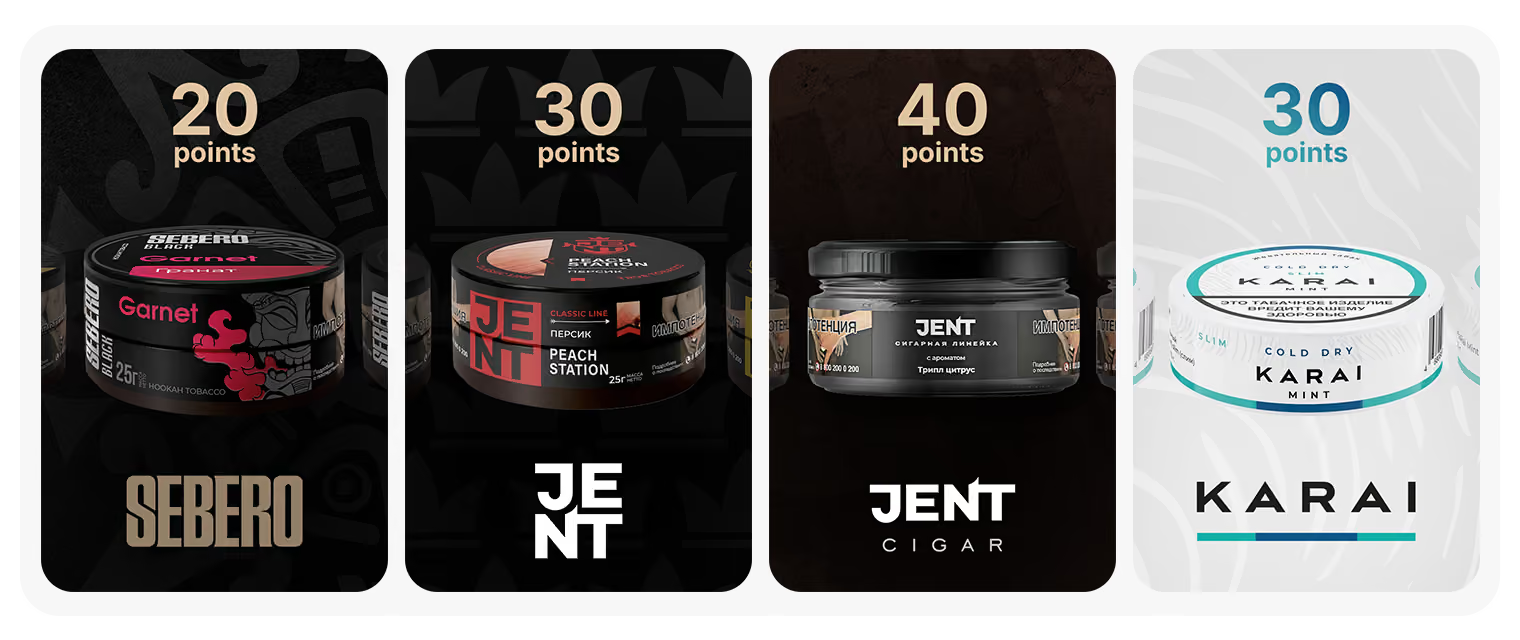
and Karai (oral tobacco). Each SKU carries its own reward rate.
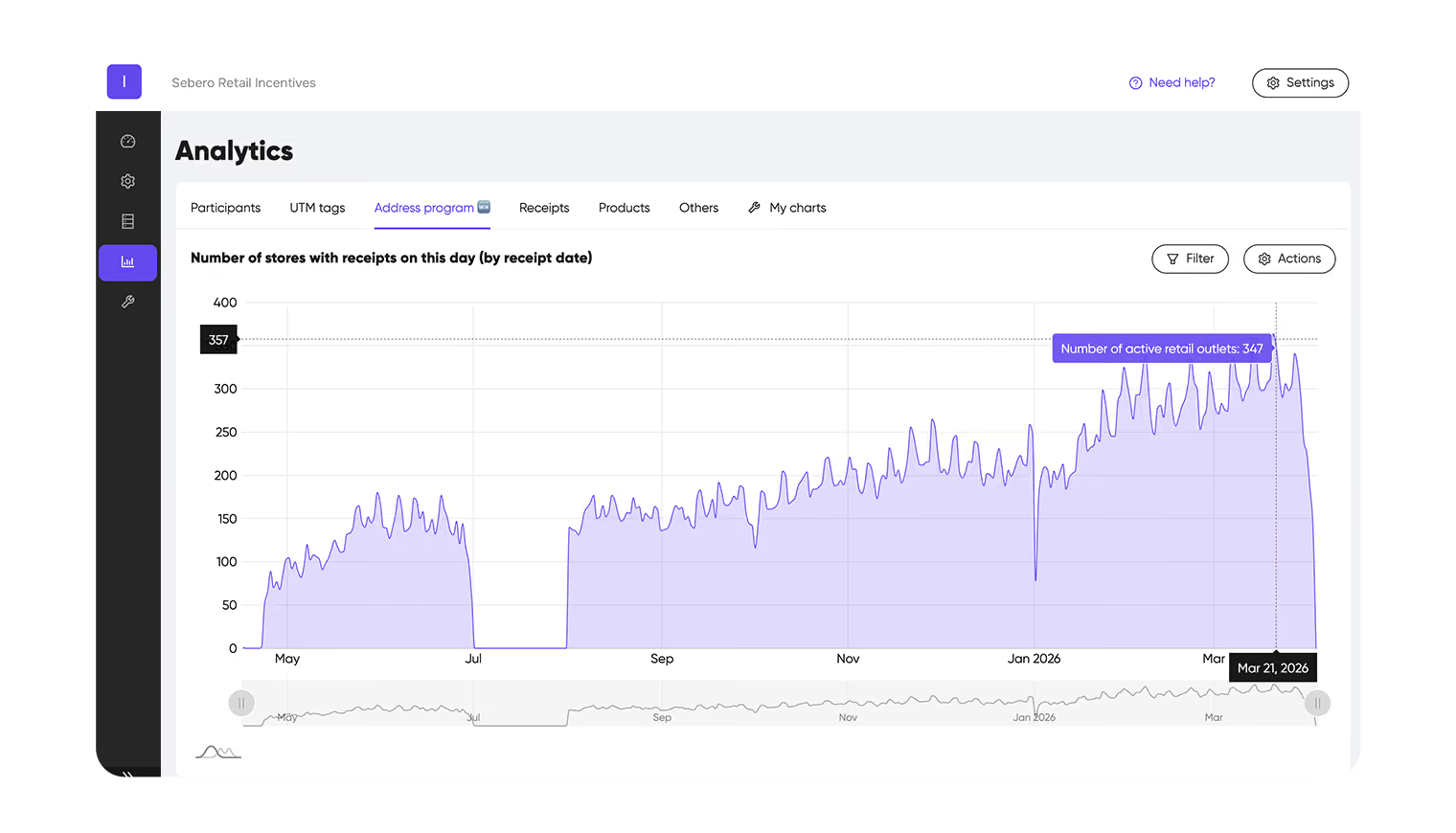
This case study follows Sebero's program from launch to month 12. It documents what they planned, what failed, what they changed, and how the numbers moved at each stage. Over 12 months, 2,300+ retail clerks enrolled in the program and 1,200+ smoke shops submitted at least one receipt. In the most recent month, 676 sellers and 659 stores were actively earning — the core that drives ongoing sell-out. But the path to that point was not linear.
The Challenge
Impact highlights
- 347,000+ products tracked through the clerk incentive program across 1,200+ retail stores
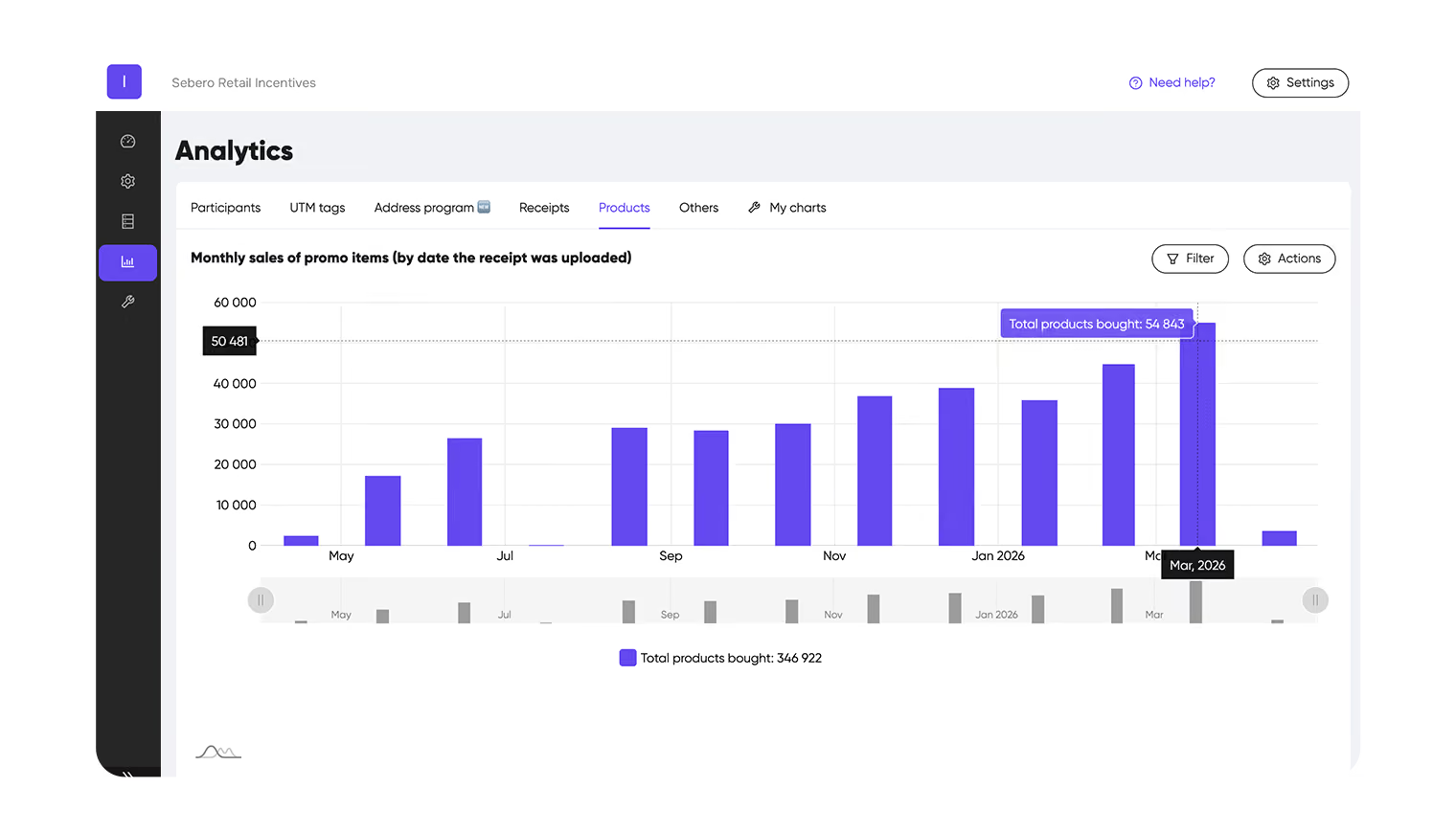
- Monthly sell-out grew 26x: from 2,092 products in month 1 to 55,045 in month 12
- Active sellers per month grew from 182 to 676; active stores from 165 to 659
- Top seller earned over $1,300 in 8 months, with the best single month above $240
- Oral tobacco category launched through the existing hookah seller base with zero separate onboarding or product education rebuild
A Different Category With Different Economics
Hookah tobacco is not vape. The dominant format is a small 25g pack, enough for one or two hookah sessions. A typical receipt contains one or two of these packs. The product moves through tobacco specialists, smoke shops, and hookah shops — not convenience stores.
This creates a different cashier incentive question than vape. A vape device retails for $20-$40, and the typical clerk reward is $1-$2 per sale. A 25g hookah tobacco pack retails for around $4. The per-unit reward is measured in cents, not dollars. Can a seller stay motivated when each individual sale adds $0.30 to their balance instead of $2?
- No national sell-out data
The company saw shipments to distributors and shipments from distributors to stores. Store-level sell-out was invisible. Which stores actually moved product, how often, and which sellers drove those sales was unknown. - Manual incentives did not scale
Previous programs were run one city at a time: hand-picked stores, manually tracked sales, individually calculated bonuses. The trade marketing team could not replicate this across thousands of stores simultaneously. - New categories required product education at scale
When the company launched Karai, an oral tobacco product, existing hookah tobacco sellers had no knowledge of the category. Product education had to reach every seller: what it was, how to position it, and why a customer might want it.
Month by Month: What Worked, What Failed, What Changed
This section tells the story of the program's first year in sequence. Each phase introduced new mechanics, tested new hypotheses, and produced data that informed the next phase.
Months 1-2: Launch and First Pivot
The program launched nationally, using distributor trade representatives to onboard sellers. Each rep received a unique referral link. The hypothesis: reps who visit stores weekly would register sellers as part of their routine.
What happened: The rep channel underperformed. Some distributors engaged, others did not execute at all. The reason became clear in hindsight: no meaningful incentive was offered to the reps for this extra action. The hypothetical benefit of higher sell-out at stores they already serve was not enough motivation by itself. Without paying the distributor at the company level or incentivizing individual reps for each registration, the scheme did not produce consistent results.
The company's own commercial team stepped in mid-month, registered as trade representatives themselves, and started onboarding sellers directly.
182 active sellers uploading receipts
165 active retail stores
2,092 products tracked in month 1, growing to 16,411 in month 2
What changed: The company stopped relying on distributor reps for onboarding. Its own commercial team became the primary channel for seller recruitment, going store by store. By month 3, volume reached 27,056 products tracked — the program had hit its internal sales targets within 90 days of launch.
Months 3-5: Building the Active Core
With the onboarding model resolved, the focus shifted to seller engagement. The team identified a loyal core of ~40% of registered sellers who uploaded receipts consistently. These sellers understood the program, trusted the payout process, and were increasing their activity month over month.
Anti-fraud settings were configured. Every receipt was verified automatically and cross-referenced with track-and-trace data. Suspicious accounts were flagged automatically.
The first raffles were conducted: prizes included consumer electronics and branded merchandise. The split between cash withdrawals and raffle participation was roughly 50/50.
Monthly products stabilized at ~28,500
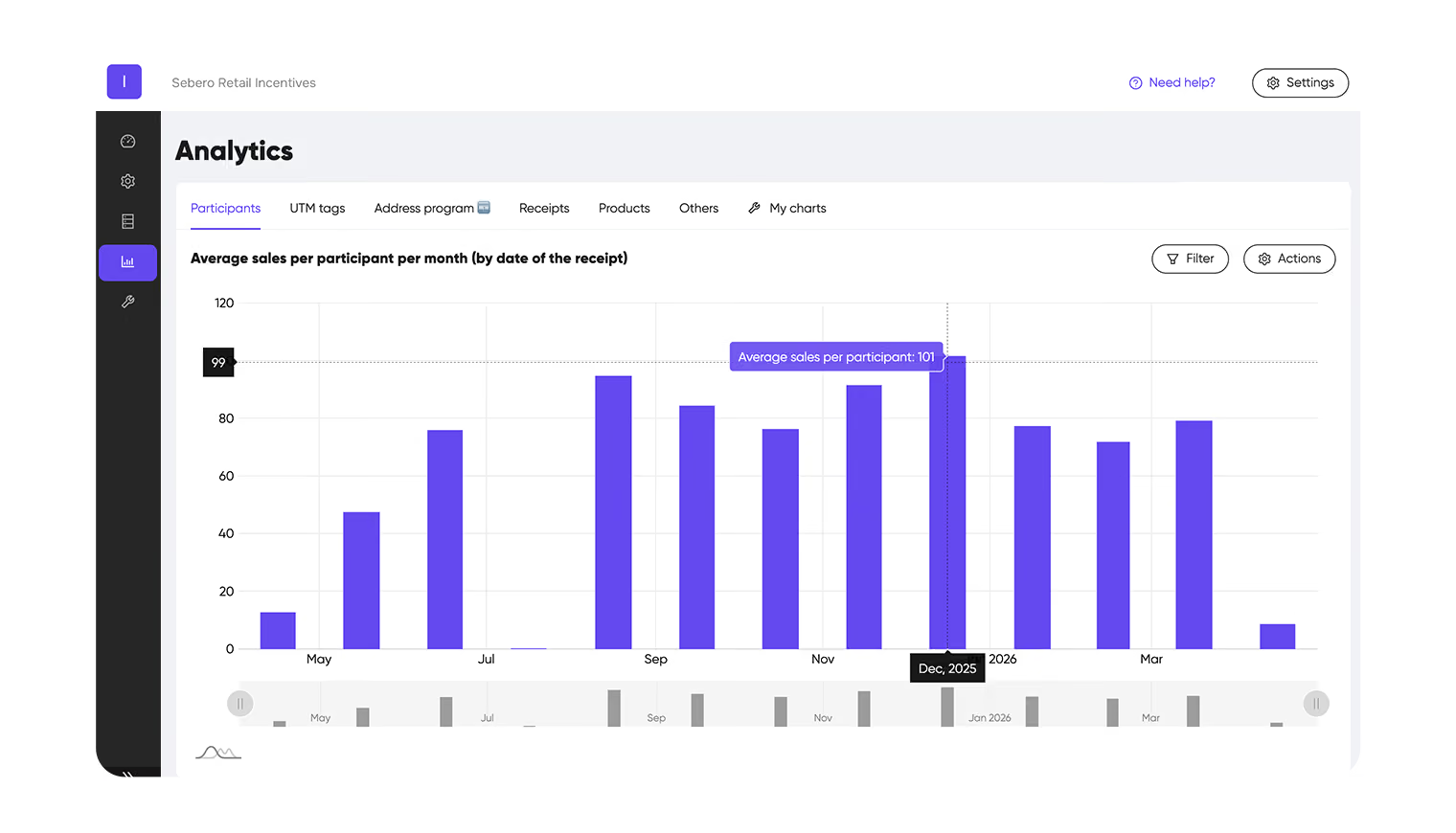
307 active sellers averaging 91 products each
The program found its rhythm
Month 6: Cross-Category Launch
The company added Karai, its oral tobacco brand, to the existing program. A different product category entirely: different consumer, different shelf, different sales conversation.
The existing base was activated for the new product. Karai appeared alongside Sebero and Jent in the same interface, with its own reward rate.
The hardest part of any new product launch in retail is the first adoption cycle: convincing sellers to pay attention to a product they have never sold. By launching through an existing program with sellers who already trusted the platform, the company bypassed this barrier.
Months 7-11: Scaling Through Direct Store Engagement
The commercial team discovered that in-person store visits were the most effective onboarding method. Retail execution became the growth engine. The company began assembling entire retail chains for combined product education and program onboarding sessions. In one case, a chain of 58 stores was onboarded in a single session: the commercial team presented the products, ran tastings, and registered all attendees into the incentive program at once.
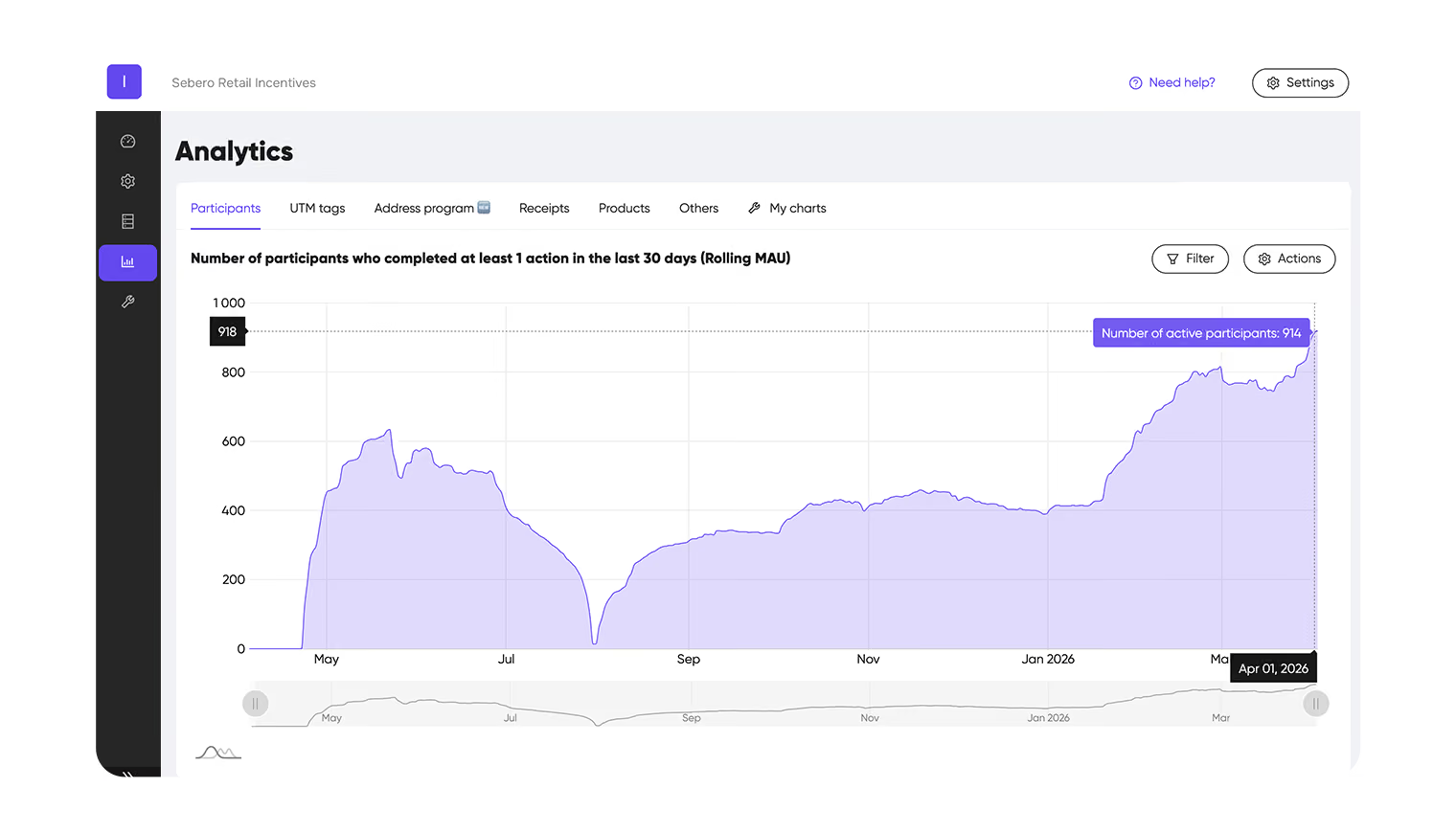
676 active sellers, up from 307 eight months earlier
659 active retail stores, up from 165 at launch
55,045 products tracked in the peak month, a 26x increase from month 1
Month 12: Where the Program Stands
The program covers three brands across two product categories. Sell-out tracking now runs at store level across 660+ locations in real time — roughly 10% of the stores that already carry the brand. The seller base continues to grow at ~10% per month, which is the benchmark for offsetting natural retail staff turnover.
The new marketing leadership has set a target of covering all 6,000 stores in the company's distribution footprint — activating distribution growth inside the existing route-to-market rather than chasing new shelves. A referral mechanic is being activated to accelerate organic seller-to-seller recruitment.
"Our commercial team went on a field audit and discovered that the most effective way to onboard sellers is just walking into the store yourself. It's 2026 and here we are — but you walk in, explain the program, show the QR code, and the person registers on the spot. That's it, they're with us."
— Aina Turbaeva, Trade Marketing Manager, Sebero
Sell-Out Growth: Products Tracked Per Month
Can a $0.30 Reward Per Sale Actually Work?
The economics of hookah tobacco incentives look different from vape on paper. Lower product price means a lower reward per unit. Understanding why this still works matters for any brand considering a program on a low-priced product.
A modest incentive that works
Sebero pays $0.25-$0.37 per unit sold, depending on the brand. The per-unit incentive is not high. But this case proves that even modest per-unit rewards work when the product is good and sellers believe they can sell a sufficient volume of it.
The top seller earned over $1,300 across 8 months. That did not happen because the reward per unit was high. It happened because the seller moved volume consistently, and each pack added another $0.30 to the balance. The incentive gave sellers a reason to recommend the brand. The product quality gave them confidence they could actually sell it.
Shopobill's platform allows brands to set differentiated reward rates per product and per brand, so the economics can be tuned to each category.
What active sellers actually earn
Over 12 months, more than 80% of earned rewards were withdrawn. That withdrawal rate indicates that sellers trust the payout mechanism and find the amounts worth claiming.
{{CTA}}
"It's about 300 sellers who message me directly. I know them by name. That personal relationship is why engagement is so high."
— Aina Turbaeva, Trade Marketing Manager, Sebero
The top performers consistently earned $130-$210 per month from the program. In a category where staff wages are modest, this represents a meaningful income supplement. The pattern shows sustained engagement, not a one-time spike.
The engagement loop: how to keep sellers in a low-reward category
When the per-unit reward is small, the trap is obvious: a seller uploads a few receipts, sees $2 in their account, and disengages before the math has a chance to work in their favor. Sebero solved this by stacking mechanics that give sellers a reason to participate before the per-unit rewards add up.
- Welcome bonus on registration
A meaningful starting balance the moment a seller signs up. Enough to make registration feel worthwhile and to give them a reason to start recommending the brand right away, before any sale. - Raffles with exclusive merch
Branded merchandise that can't be bought anywhere — only earned through the program. Every active seller has a chance to win, regardless of how much they've earned. New sellers stay engaged even before sales add up. - Referral bonuses for inviting colleagues
Sellers earn a bonus for every colleague they bring into the program. A second income stream that has nothing to do with their own sales — and turns the most active sellers into recruiters. - Multi-brand portfolio in one program
Three brands across two categories give sellers more SKUs to upsell and cross-sell. A seller who moves only a few packs of one brand per day can sell the other two as well — more earning opportunities per store visit, no higher per-unit cost to the brand. - Birthday contests and VIP events
Top sellers were flown to company events and product launches. Recognition that money alone can't buy, and a reason for the loyal core to stay active for the long term. - Direct outreach to dormant sellers
When a seller goes quiet, they get a personal message from the trade marketing team. Most reactivations happen one-to-one, not through automation.
Once a seller is in the loop — earning welcome bonuses, joining raffles, recruiting colleagues, learning new SKUs — they have a vested interest in the brand. The recommendation comes naturally. This is brand advocacy bought with economic incentive, not advertising. Soon sellers realize they can double their volume of this brand compared to before the program. The $30/month becomes easy. The math works.
The result: average products per active seller per month stayed remarkably stable across all active months, even as the seller count grew from 182 to 676. New sellers were onboarded at the same quality level as the original core. Several stores with just 1-2 active sellers tracked thousands of products over the program lifetime.
From zero to 55K products/month in 12 months
All numbers reflect a program that started from zero with no prior seller base and no prior national SPIFF experience.
- 347,000+ products tracked Through verified receipts across 1,200+ retail stores in 12 months
- 26x monthly sell-out growth From 2,092 products in month 1 to 55,045 in month 12
- 676 active sellers In the most recent month, up from 182 at launch, with 659 active stores
- 190,000+ receipts Processed across the program lifetime
- 80%+ reward withdrawal Indicating high seller trust in the payout process
- Top seller: $1,300+ Over the program, with the best single month above $240. 130 sellers earned $30+/month for 3 or more months.
- $0.25-$0.37 per unit Differentiated reward rates per product, calibrated to hookah tobacco economics
- 3 brands, 1 platform Oral tobacco category launched through the existing hookah seller base with zero separate onboarding
What's next
"Our next target is 6,000 stores — every retail location where our product is already on the shelf. We have about 600 active sellers today. There's enormous room to grow even within our existing distribution."
— Julia Kostyuchkova, Marketing Director, Sebero
A new program for shisha lounges. Shisha lounges are a distinct channel for hookah tobacco brands. Lounges are where consumers discover new brands and try premium products. The company is planning a separate incentive program for shisha masters in lounges. The unit economics, tasks, and flow are completely different from retail: different product formats, different consumption occasion, different definition of a "sale." This will be a second program running alongside the retail SPIFF, built on the same platform.
FAQ
More customer stories