From zero to 594 active clerks in four months, with no sales force of its own.
A premium nicotine pouch brand sells through distributors and employs no field reps. When it launched a clerk incentive program, the distributors' own field teams became the acquisition engine. This is what the first four months actually looked like.
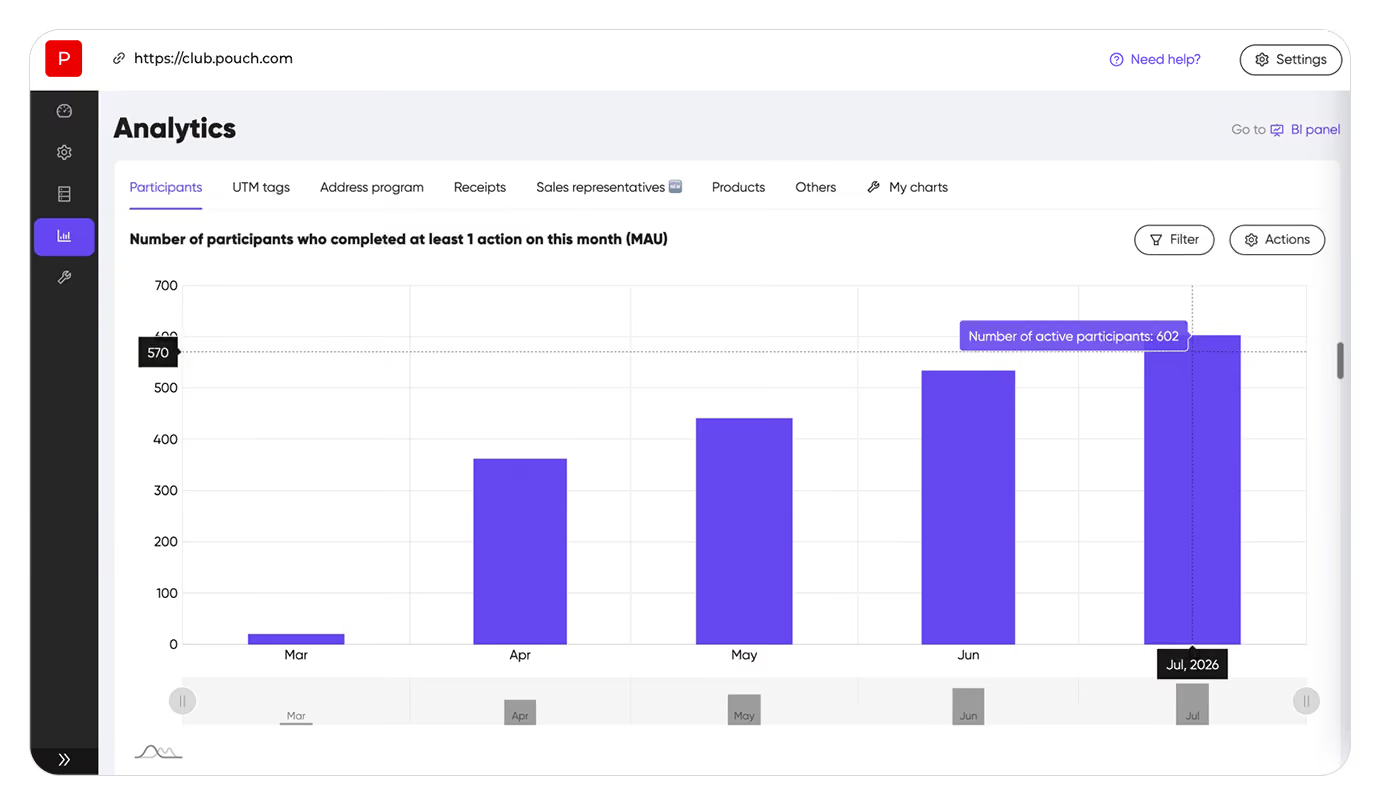
Active clerks in month 4,
from a standing start
Stores with
validated sales
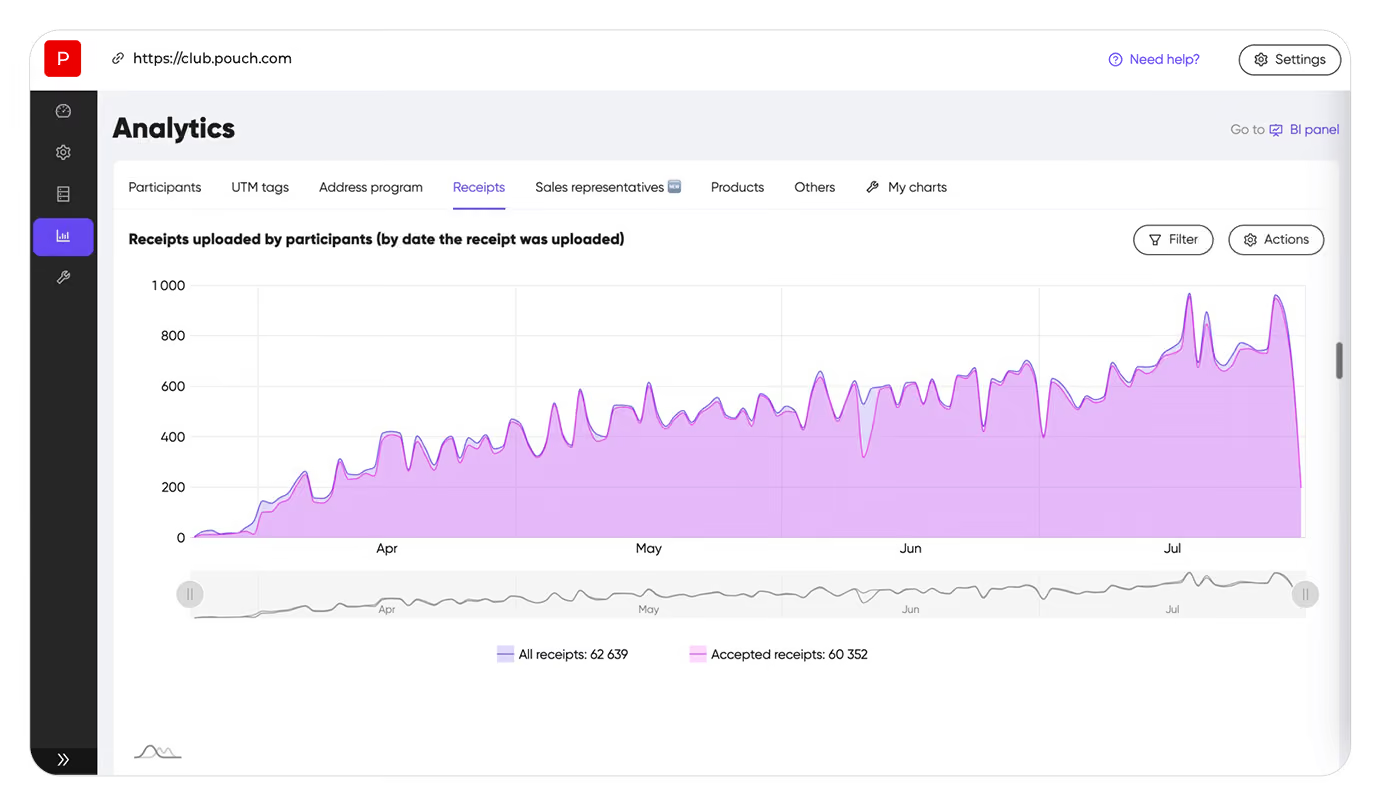
Receipts validated
at 96% acceptance
Clerk velocity: from 10
to ~40 cans a month

.svg)
The company
The client is an independent premium nicotine pouch brand with national distribution: around 70 distributor partners and shelf presence in roughly 12,000 stores across gas stations, independent convenience stores, tobacco specialists, and vape and smoke shops. A can retails for $7–8. In this category the person behind the counter directly influences the sales: pouches sit behind the counter, when shopper asks for a recommendation, the clerk's answer moves the market.
The channel mix is the reality of every challenger pouch brand. If you are not one of the giants, your first natural distribution is independent gas stations and convenience stores: the big chains take years of listing negotiations, while the independents will put you on the shelf this month. But the shelf is only half the battle. Even at the independents, the counter is contested by the global category leaders with marketing budgets no challenger can match. What a challenger can win is the person standing at that counter. A clerk who knows your product and earns on every can is the one growth lever the giants' budgets cannot simply outspend.
The brand runs lean. There is no in-house field force. Every store visit, every shelf conversation, every new-store connection happens through the distributors' sales reps. That structure is common far beyond this brand: most challenger brands in nicotine sell to distributors and carry no rep army of their own. The question this case answers is whether a clerk incentive program can be launched and scaled through other companies' field teams.
Four months ago the program was at zero.
The challenge: cash that never arrived
The brand was already paying clerk incentives before the platform. It did so the way most brands in the category still do: cash, handed through the chain, at around 500 stores. The brand paid store decision-makers, the decision-makers were supposed to pass rewards down to their clerks, and nobody could verify what actually happened past the first handoff.
Some of the money reached the clerk behind the counter. Some of it did not. There was no way to know which, where, or how much.
"The money just settles along the chain before it ever reaches the store. We weren't looking for a workaround. We wanted a system where the reward actually lands in the hands of the person who made the sale."
— Head of Sales
- Cash leaked in transit
Rewards passed through several hands before reaching the clerk, and every handoff was invisible. - No clerk identity
The brand did not know a single clerk by name. It paid a chain, not a person. - Sell-in was transparent, sell-out was not
Distributor reports covered shipments into stores. The brand did not buy syndicated MSA-style sell-out data either, so nobody knew at what pace product actually left the stores. What moved off the shelf, and who moved it, was a black box. - No scale path
The manual cash scheme stopped at ~500 stores. The brand's shelf presence is 12,000.
The distributor-powered acquisition engine
This is the part of the launch most worth studying, because the brand had no field force to onboard clerks with. It turned its distributors' field teams into the acquisition channel, and the platform made that channel measurable.
How it works. Each distributor partner received referral QR codes for the program. Their reps carry the codes on regular store visits: explain the program in ninety seconds, let the clerk scan, move to the next stop. The clerk registers by phone number on a mobile site, no app download, and every registration is permanently attributed to the distributor whose code brought it.
How the brand controls it. Attribution turns a favor into a task. The brand sets each distributor a concrete connection target and ties part of the distributor's regular retro-bonus to hitting it: full rate for delivered targets, reduced rate for missed ones. Twice a month the program owner pulls the platform's registration report, checks new clerks by territory and by distributor, and takes the results into partner conversations. A live leaderboard of distributors by connected cashiers makes the ranking visible at a glance, and custom dashboard charts slice tracked sell-out down to individual product lines. Distributor performance stopped being a matter of promises; it is a number both sides can see.


- 42.5% of the entire clerk base brought by distributor field teams
- +5.5pp higher activation rate for rep-sourced clerks vs self-serve sign-ups
- 47.7% of all program revenue comes from rep-sourced clerks
- 77–89% activation reached by the best-performing distributor teams
- 57.5% of the base joined self-serve: word of mouth carries what the reps don't
- 23 clerks connected on average by each producing rep
"Some partners really work their territory. You know they'll take the task and run with it. Others are partners on paper: hand them the task and it slips right through. We needed the program to show us which is which."
— Head of Sales
The feedback loop. The same attribution exposes the other half of the bench: of 69 connected field-rep accounts, 32 actively brought clerks and 37 brought none. The producing half averages 23 clerks per rep. That gap is not a failure of the model; it is the program's single largest mapped growth lever, visible rep by rep, and the brand works it in partner reviews with data instead of anecdotes.
How it improves next. The launch used company-level codes per distributor. The next iteration, already being tested with two distributor partners, assigns personal referral links to individual reps and rewards them not only for connecting a clerk but for that clerk's actual sales activity. Each rep gets a personal dashboard: who they signed up, who is active, who needs a nudge on the next route visit.
For any brand that sells through distributors and employs no reps of its own, this is the transferable playbook: give distributors the tools, make their field work attributable, tie targets to the numbers, and improve the mechanic one iteration at a time.
The third channel: QR on the pack itself
Reps reach the stores on their routes. Self-serve reach depends on word of mouth. The third acquisition channel the brand has started rolling out needs neither: the product carries the invitation on its own packaging.
A sticker on the can sleeve does the recruiting. The clerk unpacking the delivery sees it before any rep says a word: "Sell it? Get paid." One scan, a phone-number registration, and the clerk who stocks the shelf becomes a clerk who earns on every can they move. The wholesale sleeve travels wherever distribution goes, including the stores no rep visits, which makes the pack itself the one acquisition channel with exactly the same reach as the product.
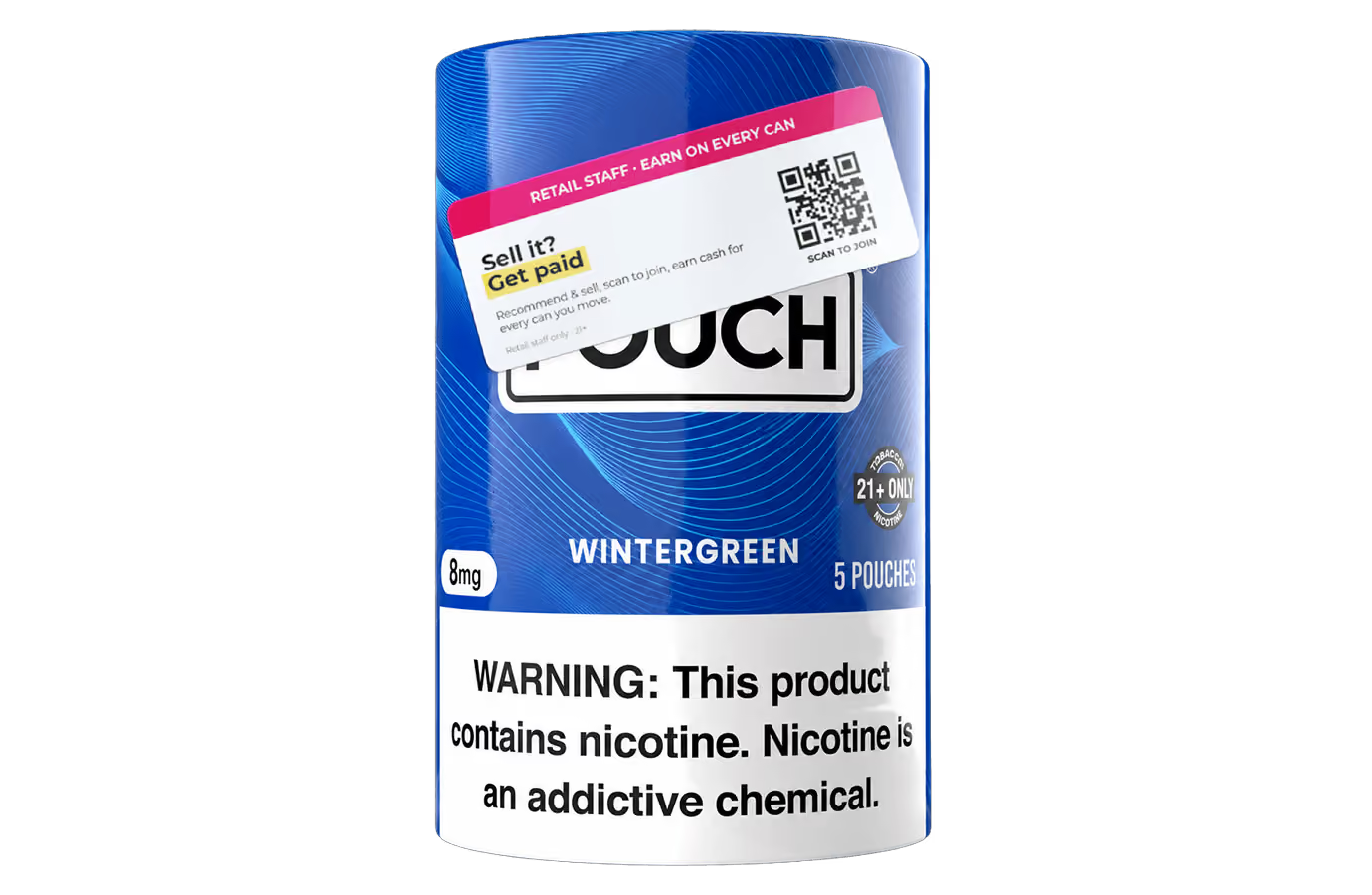
The stickers are placed in the program territories, and each carries its own tracking tag, so the dashboard shows exactly how many clerks each material brings, the same way it shows it for every distributor's code. Packaging becomes a measurable acquisition channel next to reps and word of mouth.
A launch aimed at weak territories, not a blanket spend
The brand did something unusual at launch: it deliberately excluded its 7 strongest regions from the program. In those territories the brand is already the established name on the counter, and rewarding sales that would happen anyway is trade marketing budget burned. The program was pointed exclusively at territories where the brand is underrepresented, working point-by-point through the distributors active there.
"We left those regions out on purpose. We are already strong there, and announcing the program there would just be burning money. We'd rather go point by point, through our distributors, where we actually need the growth."— CEO
The platform enforces the boundary: excluded territories are blocked at validation level, so receipts from outside the target geography never enter the reward pool. Early in the program a referral code leaked into a blocked territory; the platform caught it as a zero-activation anomaly, and the boundary held.
Four months of results in this case are therefore not a national blanket number. They are concentrated in the exact territories the brand chose to attack, which is what makes the sell-out curve strategically meaningful rather than just large.
The first week decides who becomes a seller
The launch mechanics were built around one conviction: a clerk who feels the reward loop working in week one becomes a seller; a clerk who waits, drifts.
- Reward from the first can. The team debated starting rewards at the fourth can sold and chose to pay from can one instead: at launch, nothing beats instant proof that the program is real.
- A deliberately low first-payout threshold (about $5): the first withdrawal happens within days, not weeks, and the first payout is the moment a clerk starts believing.
- Receipt validation in seconds: the clerk scans the receipt QR at the counter and the balance updates on the spot.
- The loop runs itself. Every lifecycle event triggers an automatic notification: registration confirmed, receipt accepted, receipt rejected, payout on its way.
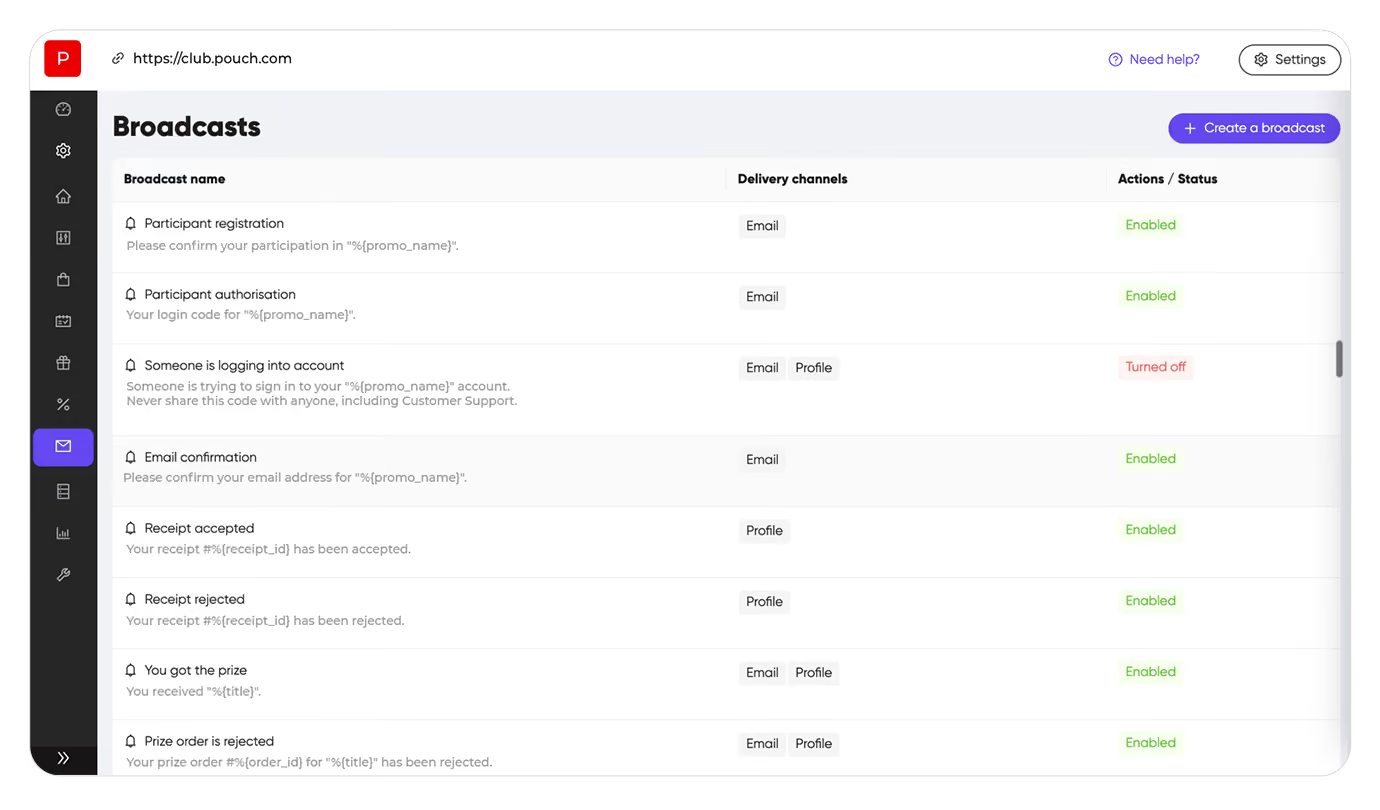
The program's own four-month data confirms the design choice:
- 77% of activated clerks upload their first receipt within 7 days of registration (6.4 days on average).
- Clerks who upload a receipt on registration day go on to produce 2.7x more receipts and 2.7x more revenue than clerks who take longer than a week.
- Receipt acceptance climbed from 74% at soft launch to 97% by month 4: the rules became understood, and clerks learned to load clean receipts.
- Clerks cash out what they earn: 73% of all points earned in the program have already been withdrawn. Most payout requests clear automatically; roughly one in three gets a human review before release, which is how the program stays both fast and fraud-proof.
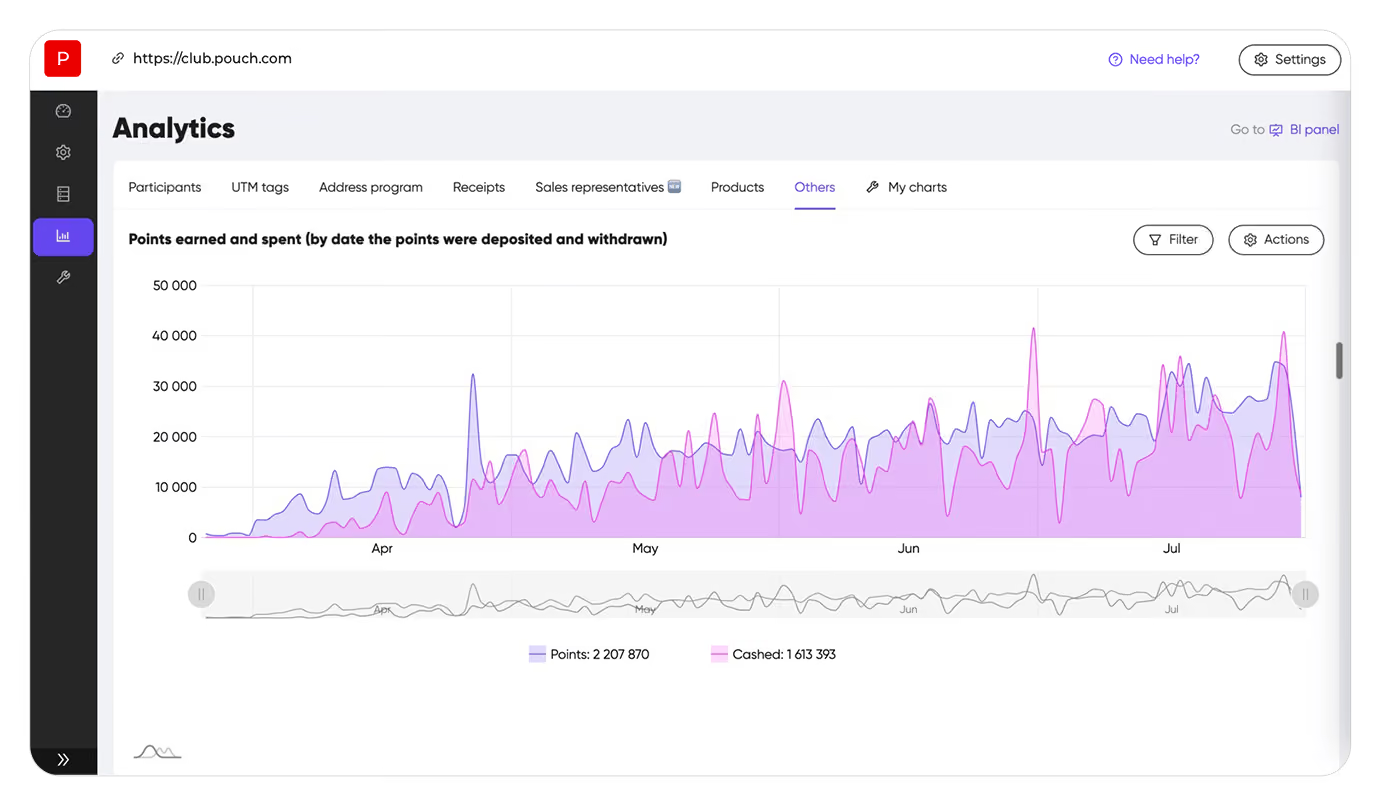
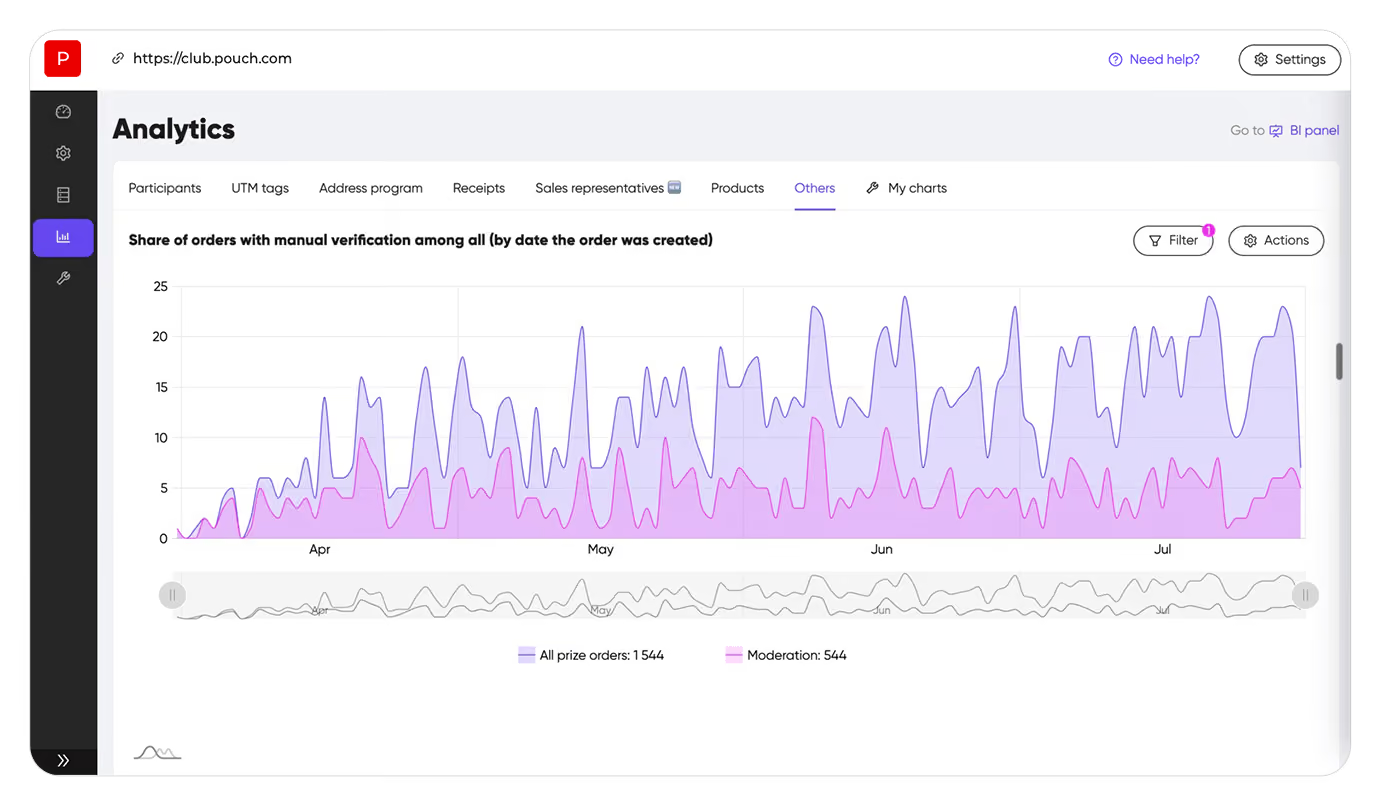
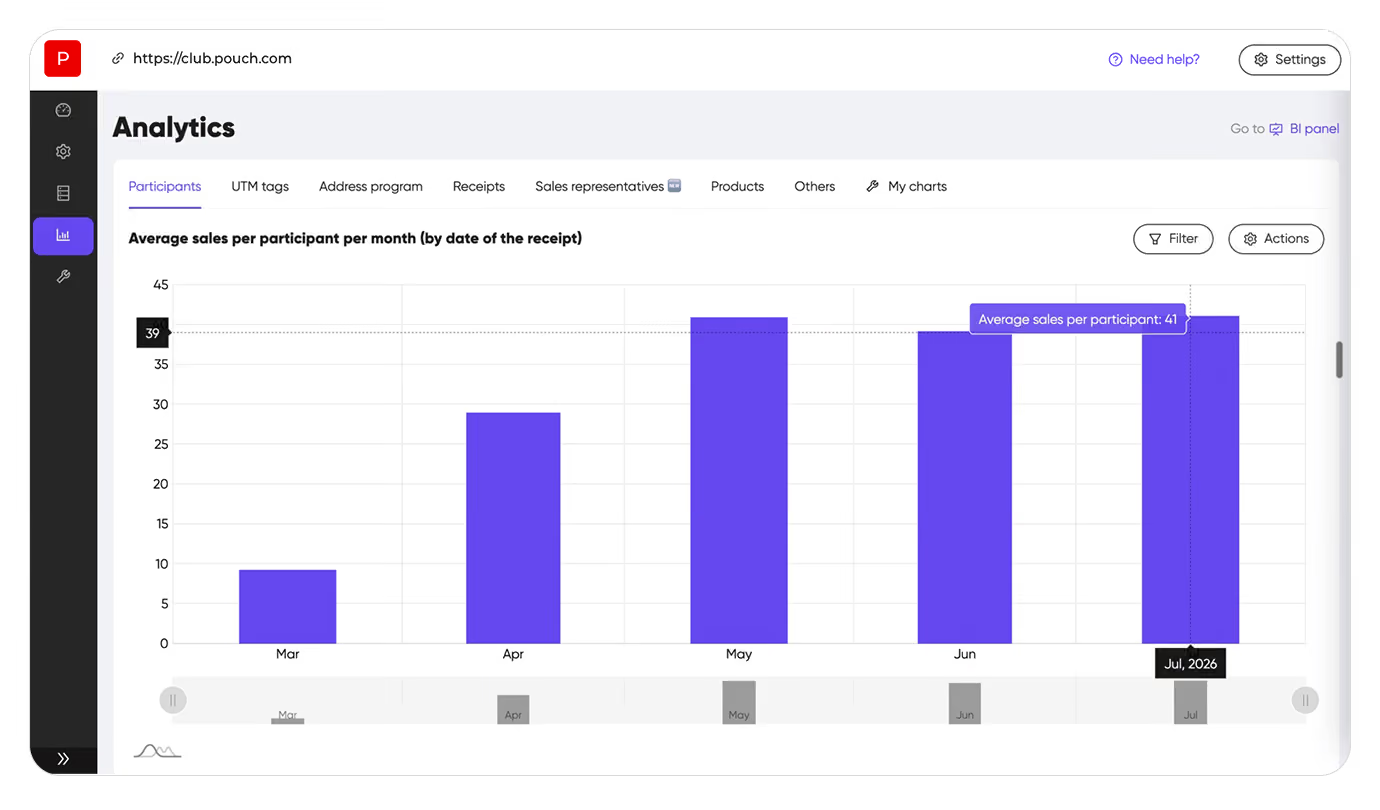
The four-month launch curve
All numbers below describe a program that started from zero and is still growing.
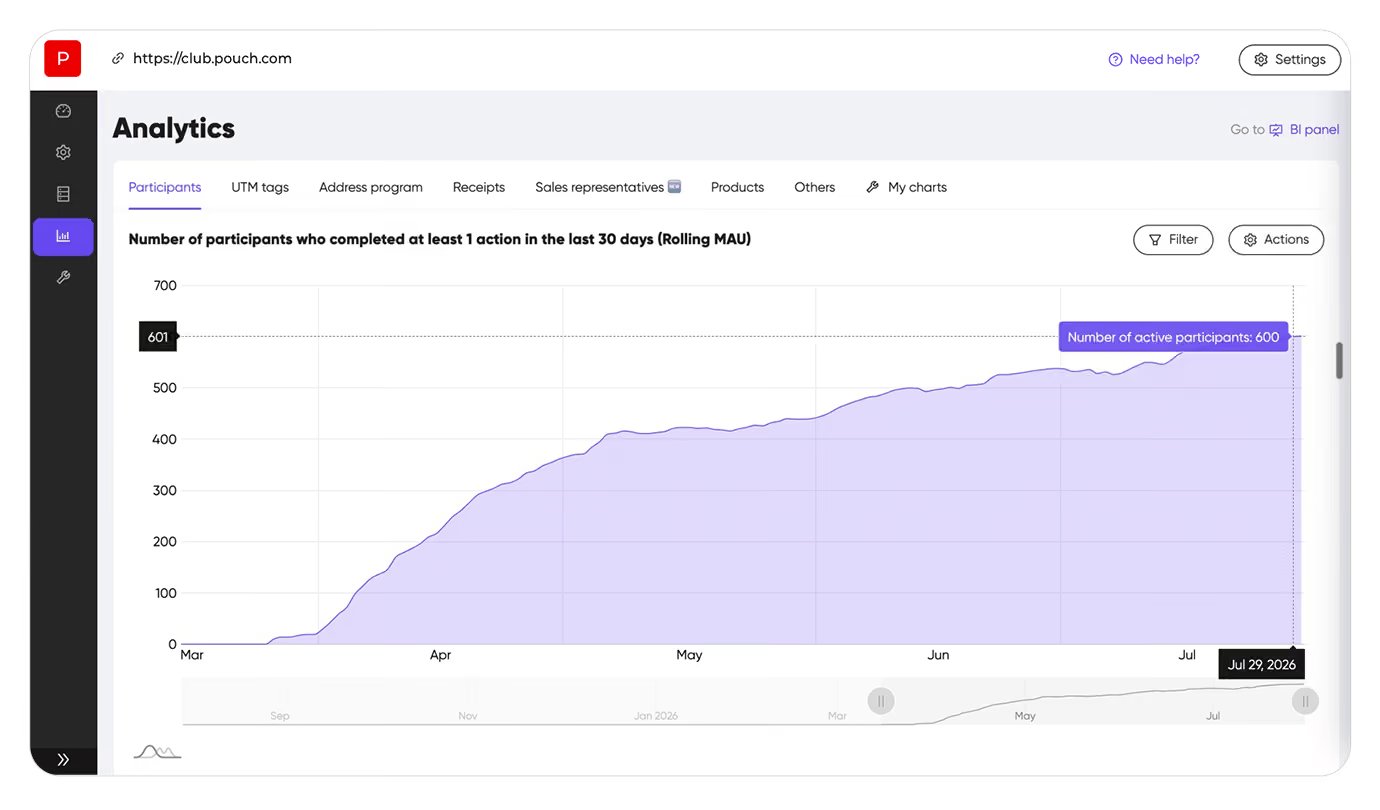
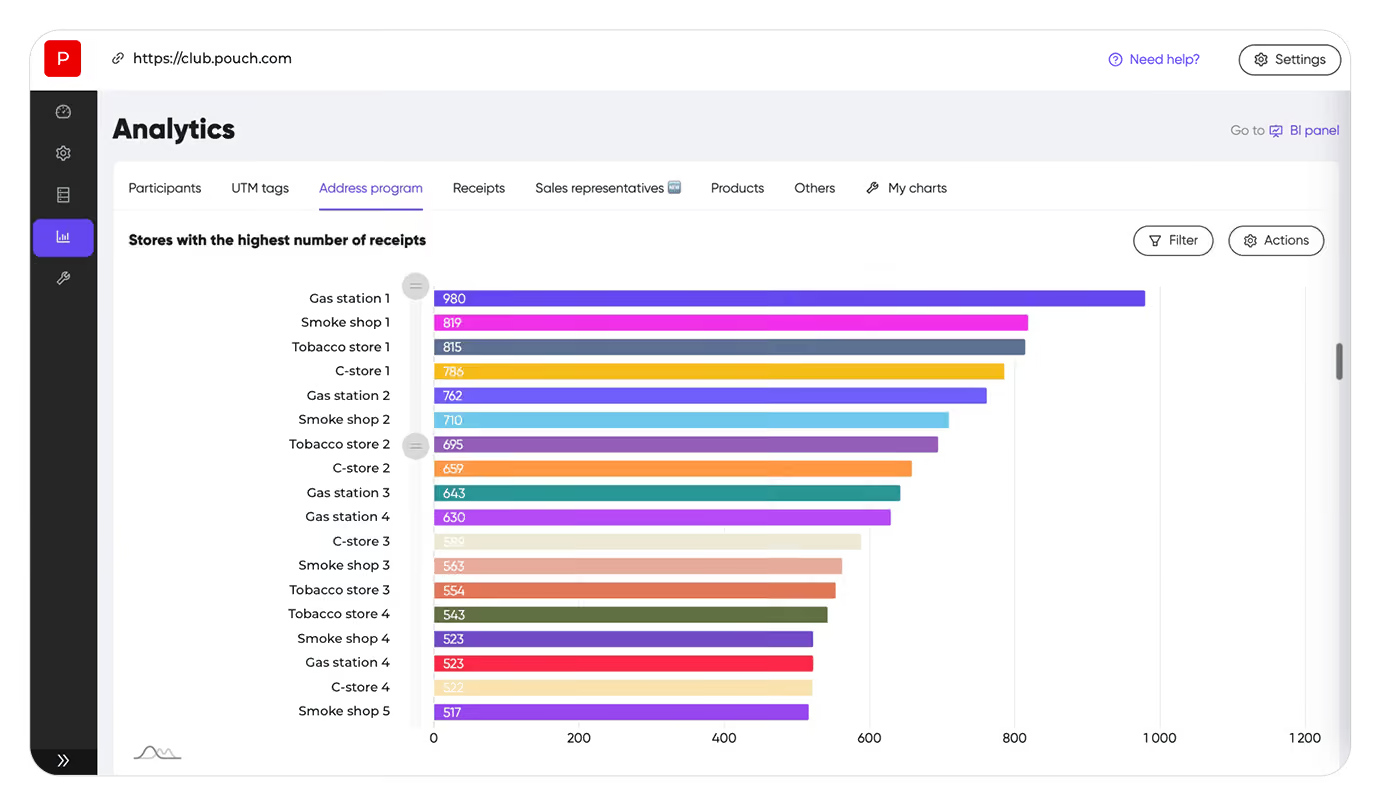

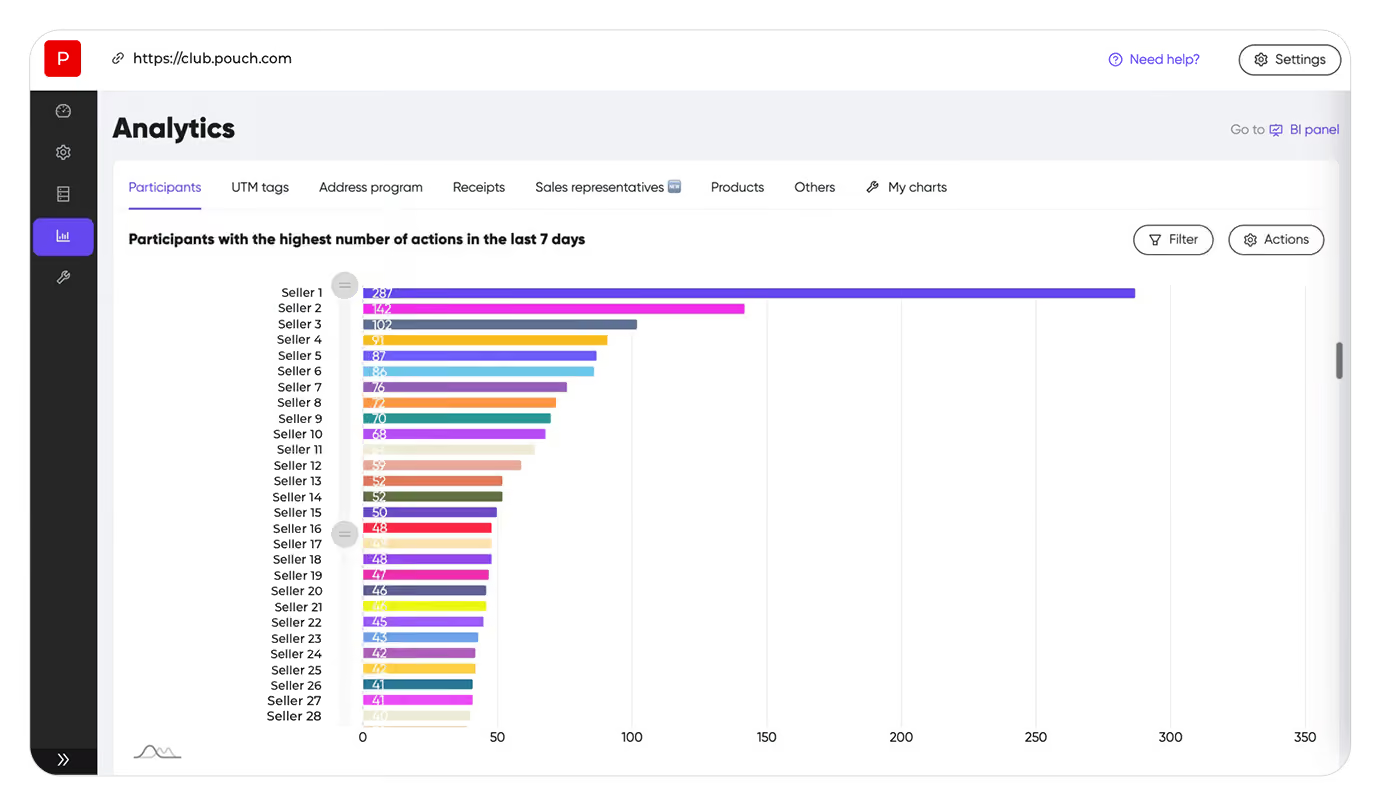
One more signal worth noting: 33 clerks changed stores over the four months and kept uploading receipts from their new counters.
"Those 33 people are word-of-mouth ambassadors. They change stores, and the program travels with them."
— Head of Sales
{{CTA}}
What's next
The playbook for the next phase is already in motion. Personal referral links for individual distributor reps, with rewards tied to their clerks' ongoing activity, are in test with two distributor partners. A peer referral mechanic will let active clerks invite colleagues, targeting the second clerk behind every counter. A welcome bonus that unlocks with the first receipt, a task engine for onboarding, and a product education layer are queued behind it. The dormant half of the distributor rep bench remains the largest mapped acquisition reserve, and the brand now has the per-rep data to wake it.
FAQ
More customer stories