What's stopping clerks from scanning every product on the shelf?
Direct answer: The design of the program and the technology behind it. Any program that pays per sale gets tested, usually within the first weeks. Three things stop it: how the sale is verified, a platform that scores every participant continuously on their activity, and automatic rejection of submissions that fail the checks, such as duplicate receipts, altered receipts and codes registered without a sale. This guide is written by Shopobill, the SPIFF platform 35+ nicotine brands use to run these programs, with more than 90 campaigns behind its controls.

Ask any brand that has looked at an incentive program for store staff, paying per verified sale, and the first serious question is some version of this one. It comes as concrete scenarios: what stops him scanning every barcode on the shelf? What if five clerks in one store send in the same receipt? How does the system know a receipt has been doctored? What if one person registers five accounts? Can I cap what one clerk or one store earns? Buyers who have run programs before ask it in one line: where are the points of failure?
These are the right questions. When money is paid per sale, some people will try to get it without selling. This guide takes the questions one by one and says how the program's design and the platform's technology deal with each.
"How do you verify the sale in the first place?"
All of these questions are about one thing: proof that a sale happened. A program can prove a sale in three ways, and the brand chooses which one before launch.
A receipt. The clerk photographs the store's printed receipt and the system reads it. Two things can go wrong: the same receipt is sent twice, or the receipt has been edited.
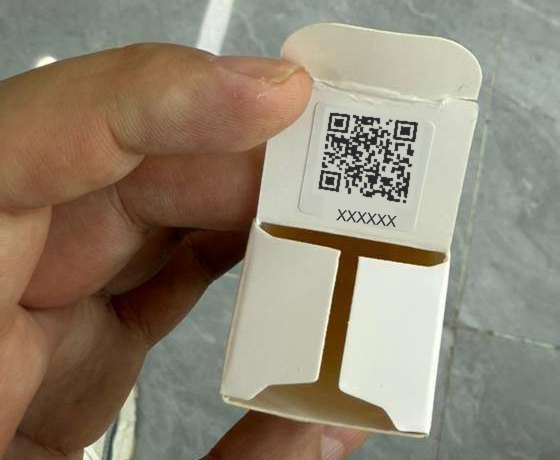
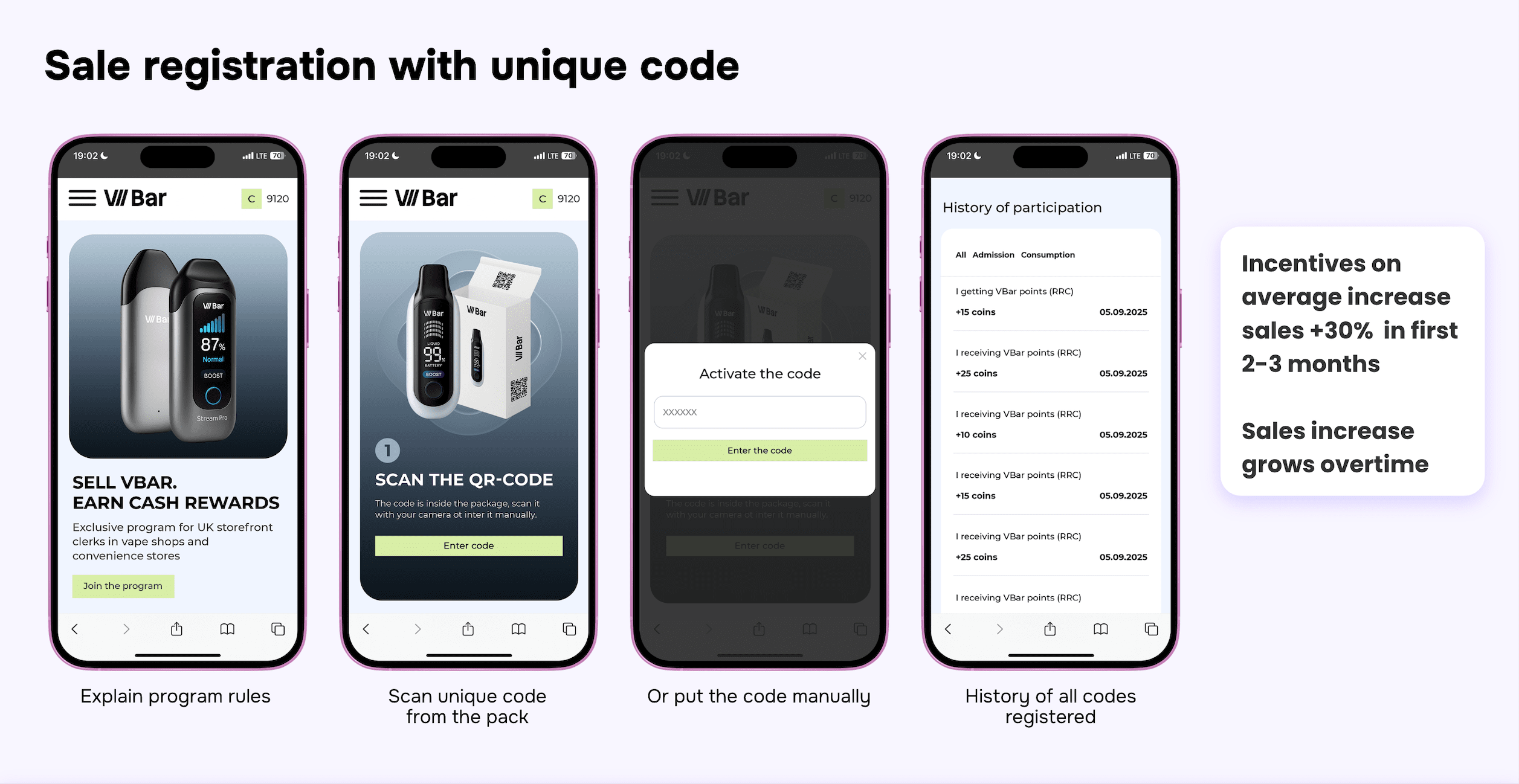
A code on the pack. Each unit, for example a vape or a can of nicotine pouches, carries a unique code that works once. There is no receipt to copy or edit. The question is whether the code was scanned for a real sale.
A track-and-trace identifier. In some markets the law already puts a unique code on every pack, and the program can use that code instead of printing a new one. Two examples:
- Tobacco products in the European Union. Under the Tobacco Products Directive, every pack of tobacco products sold in the EU carries a unique identifier. The rule has applied to cigarettes and roll-your-own tobacco since 2019 and to all other tobacco products since 2024. Tobacco brands selling there already have a code on every pack.
- Vaping products in the UK. Since 1 October 2026 vaping products carry a duty stamp under the Vaping Products Duty. The stamp goes on the outside of the retail pack. The digital stamp, required on new products from 1 January 2027, has a scannable code, and from 1 April 2027 a vaping product cannot be sold without a stamp.
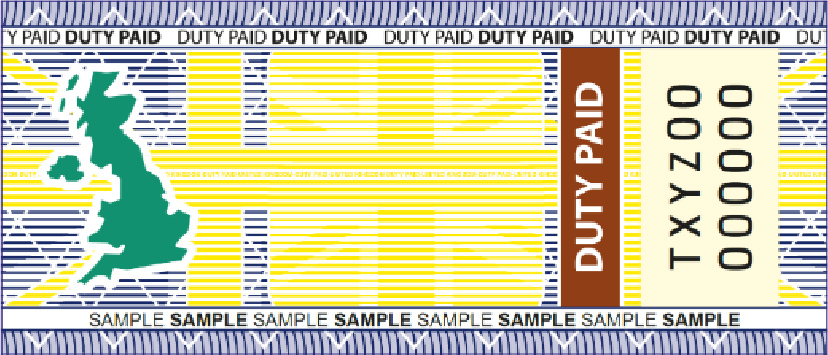
It works like a pack code: the clerk scans the identifier that is already on the pack, each identifier is accepted once, and the brand prints nothing new.
The brand chooses the method per channel at setup: receipts where stores print itemised receipts, codes where they don't. Each store uses the method set for it. Shopobill supports all three. How each one works, and which fits which channel, has its own guide: how a SPIFF program verifies a sale.
The method also sets the level of proof. A receipt proves that a sale took place. A code proves that one specific pack was sold. A brand that wants proof for every pack uses codes or the track-and-trace identifier.
"What stops him scanning every code on the shelf without selling the product?"
This is the main risk in a code-based program. The clerk scans the packs that are in the store and collects the reward. The brand has paid, and the product is still on the shelf.
The program deals with it in four ways.
- The code is inside the pack. It is under the flap or inside the packaging, so the clerk reaches it only when the pack is opened. In a store, a pack is opened when a customer buys it.
- Each code pays once. After a code is registered, no account can use it again.
- Scanning stock does not look like selling. Every registration is recorded with its time, account and store. Sales to customers come one at a time through the day. A store that registers its stock does it in batches. The platform recognises the difference and holds those rewards before anything is paid.
- Rewards are capped, and violations stay on the account. A clerk cannot earn more than the cap set per person and per period. An account that registers codes without sales loses points or is restricted.
A duty stamp or a track-and-trace identifier is printed on the outside of the pack, so the first point does not apply to it. The other three do.
The brand can also check the result against its own orders. A store that registers many sales and does not reorder has not sold them.
Brusko, a vape brand, validated 697,000+ sales through pack codes. A code can be claimed once, so every reward has a physical pack behind it.
"What if five clerks in one store send in the same receipt?"
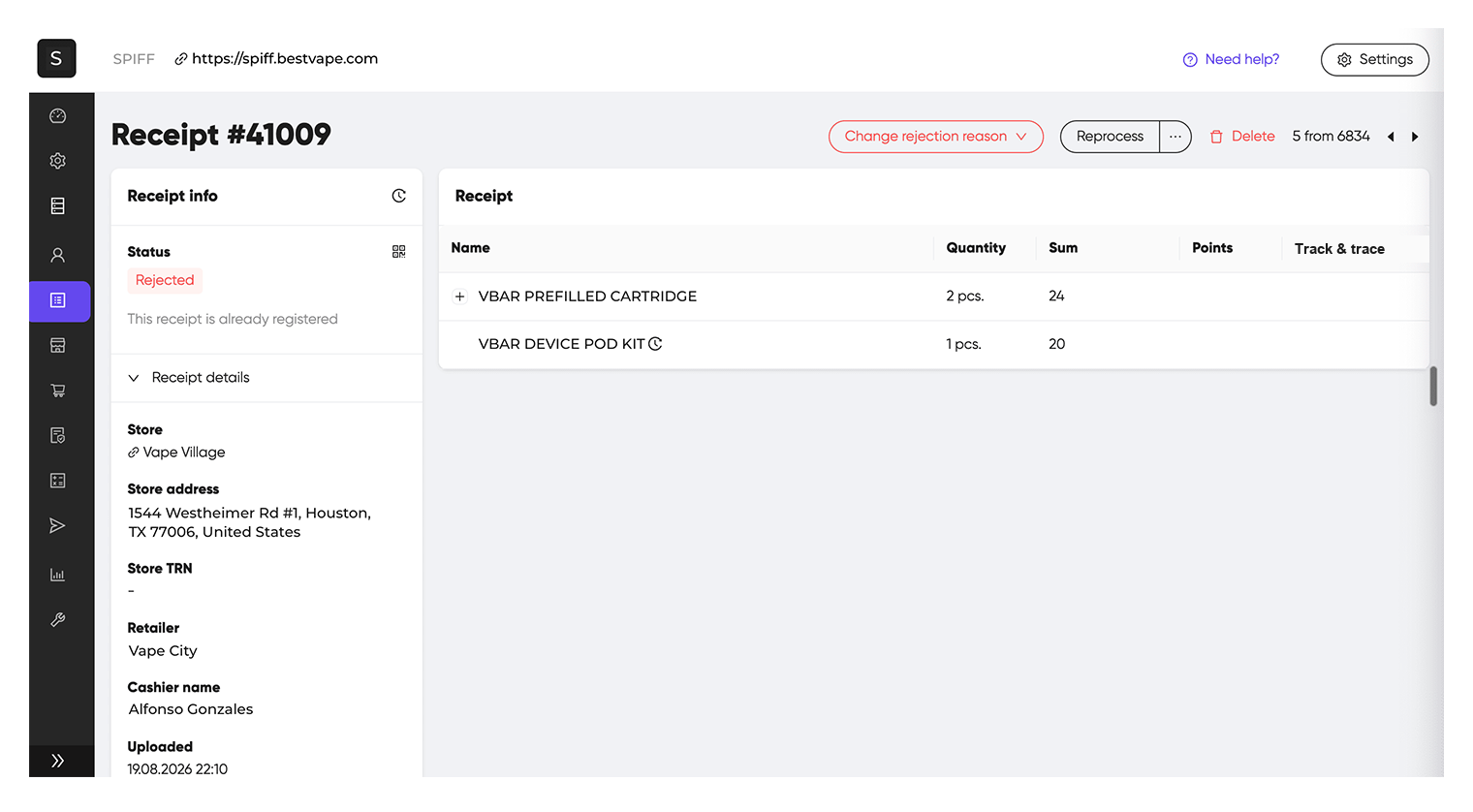
The second one is rejected, and so are the third, fourth and fifth.
Shopobill identifies a duplicate automatically, whichever account sends it and whichever store it comes from. The system compares each receipt with every receipt already submitted, so nobody on the brand's trade marketing team has to check. Ignite verified 170,000+ products through receipt uploads across 2,791 stores this way, with a 93% acceptance rate on more than 166,000 submissions. Everything that failed was rejected before any payout.
"How does the system know a receipt has been doctored?"
Image editors and AI tools can change a quantity on a receipt or create a receipt from nothing. Buyers now ask about this directly.
Recognising altered receipts is built into the system. It identifies several kinds of alteration, including AI-generated receipts, and rejects them automatically, before payout. The clerk sees that the submission did not pass. The brand sees the count.
Two things keep this working. The system learns: every receipt it reads improves its knowledge of what real receipts from real stores look like, so it gets more accurate with volume. It also looks at patterns, not only at single receipts. In one live program, the accounts at one outlet all began submitting generated receipts in the same period. No single receipt was enough to prove it. The pattern at the outlet was. The outlet was blocked, and the rest of the program kept validating and paying normally.
"Is it one person behind five accounts? Do they even work in the store?"
Both questions are answered at registration, before the first sale.
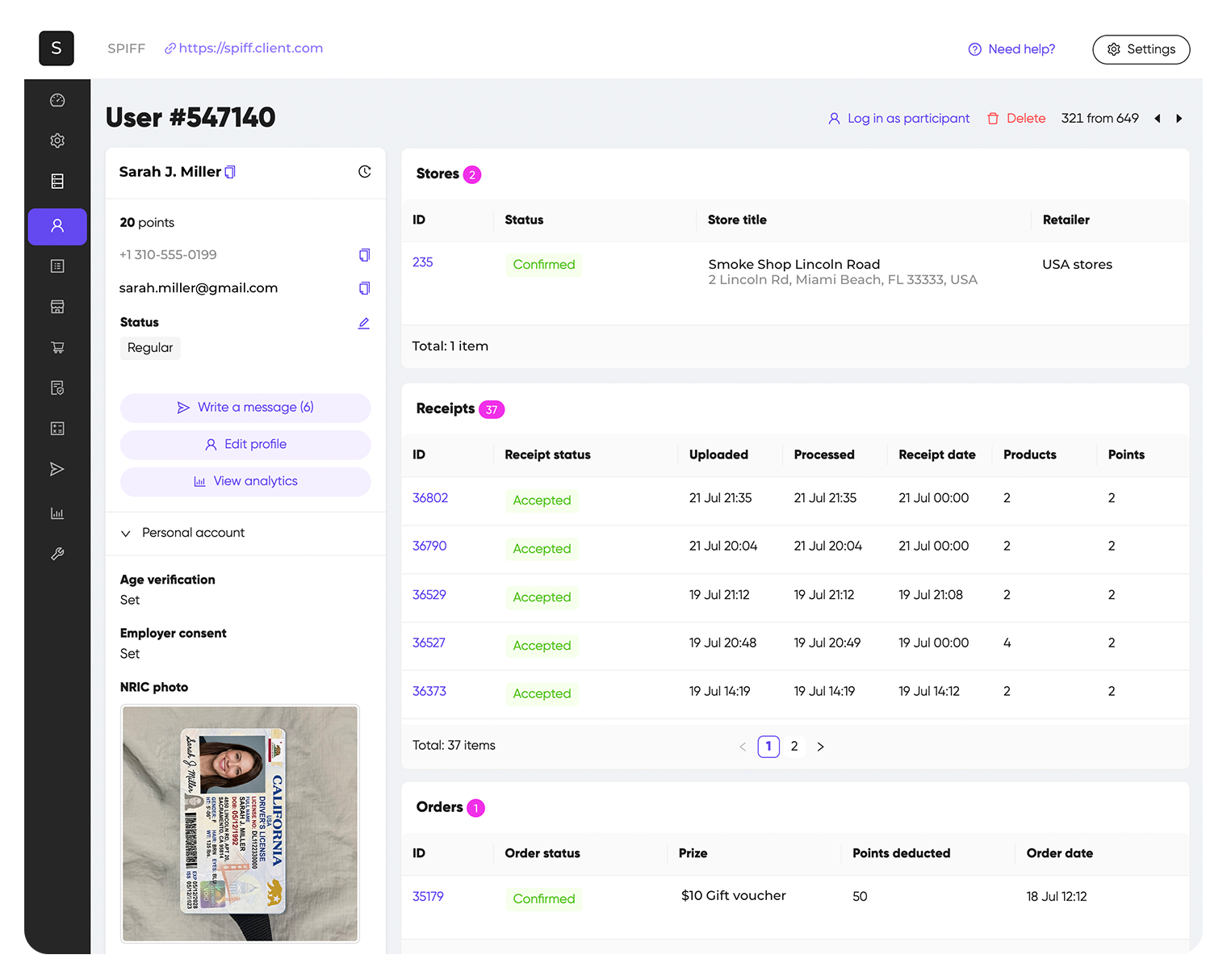
Every participant is verified as a person and linked to a confirmed store. The employer is aware, and age is checked where the category requires it. One person holds one account. A shopper who finds the program link, or someone who only claims to be a clerk, does not pass registration. The same checks make the program compliant in regulated categories, where verified adult participants and employer consent are baseline requirements.
Verified accounts also solve a problem in busy stores: two clerks with the same first name, both selling. Each sale is recorded on the account that submitted it, so the leaderboard stays fair. Clerks stop taking part when a leaderboard looks rigged.
"With thousands of clerks, how do you watch all of them?"
Nobody watches them. The platform scores them.
Every participant on Shopobill carries a live score. It is built continuously from what the account does in the program: how it registered, what it submits, how its activity compares with the way clerks in this channel normally sell, and the notes kept on the account inside the program. The score changes as behaviour changes. A clean account validates in seconds and is paid fast. An account whose score drops has its rewards held and goes to a person, and the brand's manager decides.
The score has consequences. A SPIFF program runs continuously and every action stays in the participant's history. A violation leads to points deducted, a reduced balance or restricted participation. A clerk who games the program loses their own future earnings in it.
Only technology can do this. Past a few hundred participants, nobody can review every submission by hand. It would not help anyway, because no single submission looks wrong on its own. A duplicate only shows up when compared with every receipt already read. An unusual store only shows up when compared with normal ones. Suspicious behaviour shows in patterns across accounts, stores and time, and only a system that holds all of that data can see it.
To call something unusual, the system has to know what normal looks like. A brand's first program does not have that data yet. Ours comes from more than 90 campaigns in vape shops, smoke shops and convenience stores, and a pattern caught in one program protects all the others.
"Can I cap what one clerk or one store earns?"
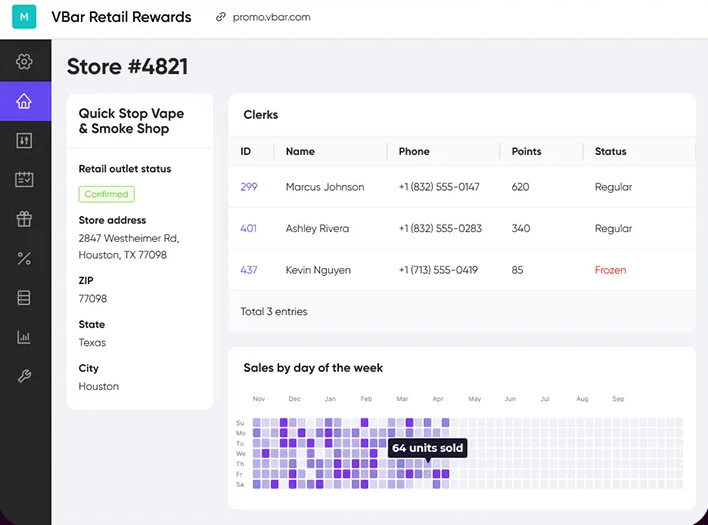
Yes. Buyers who have run programs before ask this first, because they want to be sure the budget stays under their control. On Shopobill, limits are program settings. Rewards are capped per participant and per period. The reward per unit can be changed by SKU while the program runs, so a product that already sells well can pay less and a launch SKU can pay more. At store level, a jump that the store's real sales cannot explain goes to review before it pays.
A store that sells a lot is a different thing. It is the result the program is paid to produce. An owner who works the counter and submits every sale is a participant doing what the program asks, and each of those rewards has a real sale behind it. Fraud is a reward with no sale behind it, or a reward claimed by someone who did not sell. High volume from real sales is neither.
Caps also cover the top seller whose volume would make a flat per-unit reward too expensive. Above a threshold the reward can step down, or switch from a per-unit payment to a volume bonus, so top sellers stay motivated and the budget stays within plan.
The budget also has a hard limit. The incentive fund is funded in advance and pays only for validated sales, only within the caps. The most the program can spend is the amount the brand set before launch.
Three principles behind the controls
- Prevention over clean-up. A bad submission is stopped before it is paid. Taking money back from store staff afterwards costs more than the money, and it damages the relationship with the stores.
- Automation, because volume beats manual review. Every receipt and every code passes the same checks. Only the flagged ones reach a person, and their payout waits for a decision. Honest clerks never notice.
- Methods that keep expanding. Clerks test every program, and the tools they use change: a few years ago nobody planned for AI-generated receipts. The rule set grows with every attempt, across every campaign.
A new program learns about each scheme by paying for it first. The controls on the platform come from the attempts seen across more than 90 campaigns, so they are in place on day one.
The honest expectation
Someone will test your program in the first weeks. That is normal, and it shows the reward is worth something to them. What matters is that the attempt is caught before any money is paid. Brands running SPIFF programs at scale see attempts all the time and lose very little.
A brand running a program sees the result: every held submission with its status, every participant with theirs, and a record that links each reward to the sale that earned it. That record is also the program's sell-out data by store and SKU, a secondary benefit, and it is what lets a finance team approve a bigger budget.
Shopobill includes all of this in its retail sales incentive platform: verified registration, receipt authenticity and uniqueness checks, one-time pack codes, track-and-trace validation where the market has it, a digital footprint and a live score for every participant, limits per person, per store and per period, and a review queue for the cases a person should decide. 35+ nicotine brands run their cashier incentives and retail staff incentives on it. See the platform for brands.
Frequently asked questions
-
How do clerks try to cheat retail incentive programs?

-
How can I prevent fraud when paying store employees per-sale bonuses?
-
Does the way a sale is verified change which fraud a program faces?
-
How does the system know if a receipt has been doctored or AI-generated?
-
What is live participant scoring in an incentive program?
-
Can I cap how much one clerk or one store earns?
-
Do fraud controls slow down honest clerks?